More requests than existing tools and processes could study
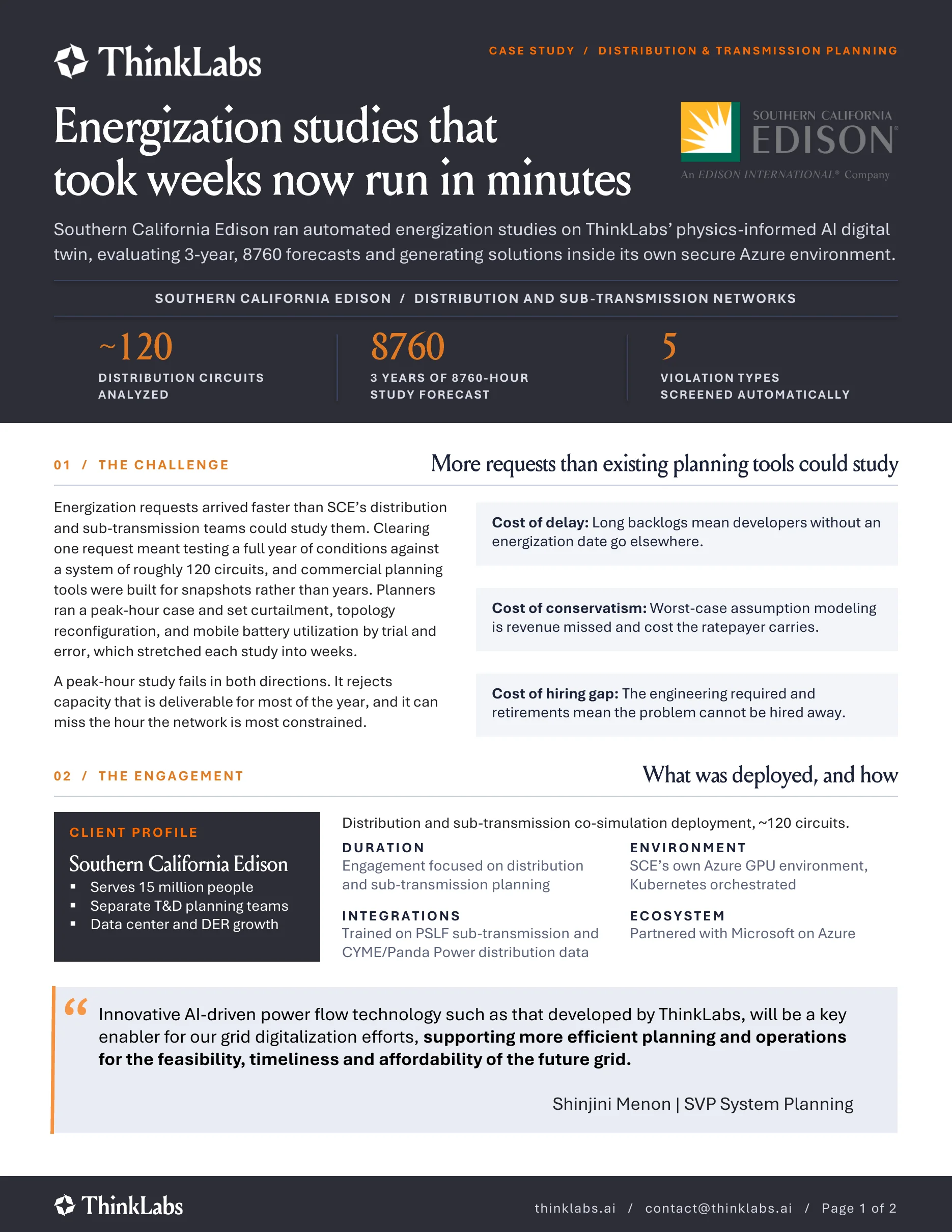
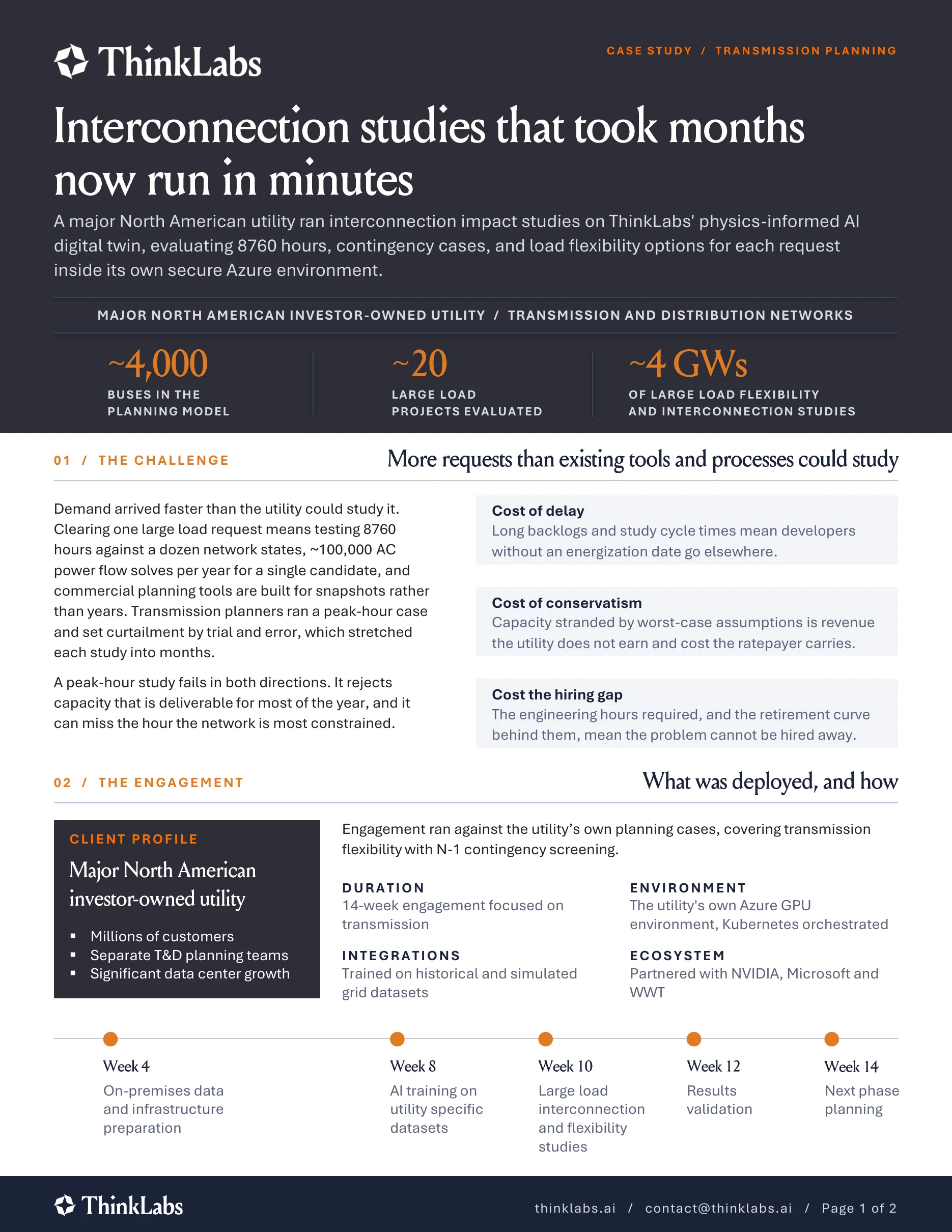
Demand arrived faster than the utility could study it. Clearing one large load request means testing 8760 hours against a dozen network states, ~100,000 AC power flow solves per year for a single candidate, and commercial planning tools are built for snapshots rather than years. Transmission planners ran a peak-hour case and set curtailment by trial and error, which stretched each study into months.
A peak-hour study fails in both directions. It rejects capacity that is deliverable for most of the year, and it can miss the hour the network is most constrained.
- Cost of delayLong backlogs and study cycle times mean developers without an energization date go elsewhere.
- Cost of conservatismCapacity stranded by worst-case assumptions is revenue the utility does not earn and cost the ratepayer carries.
- Cost of the hiring gapThe engineering hours required, and the retirement curve behind them, mean the problem cannot be hired away.
What was deployed, and how
Engagement ran against the utility’s own planning cases, covering transmission flexibility with N-1 contingency screening.
Client profile
- Millions of customers
- Separate T&D planning teams
- Significant data center growth
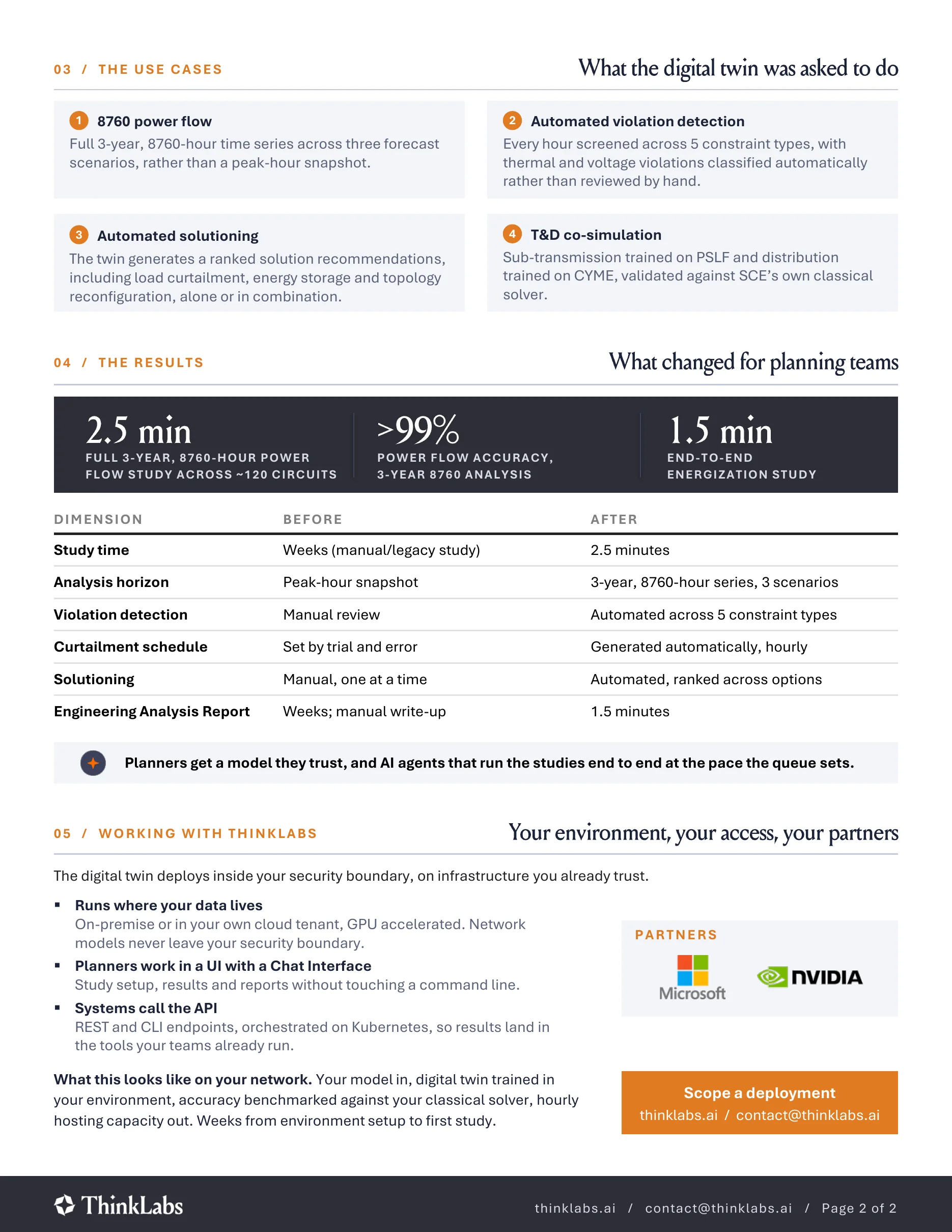
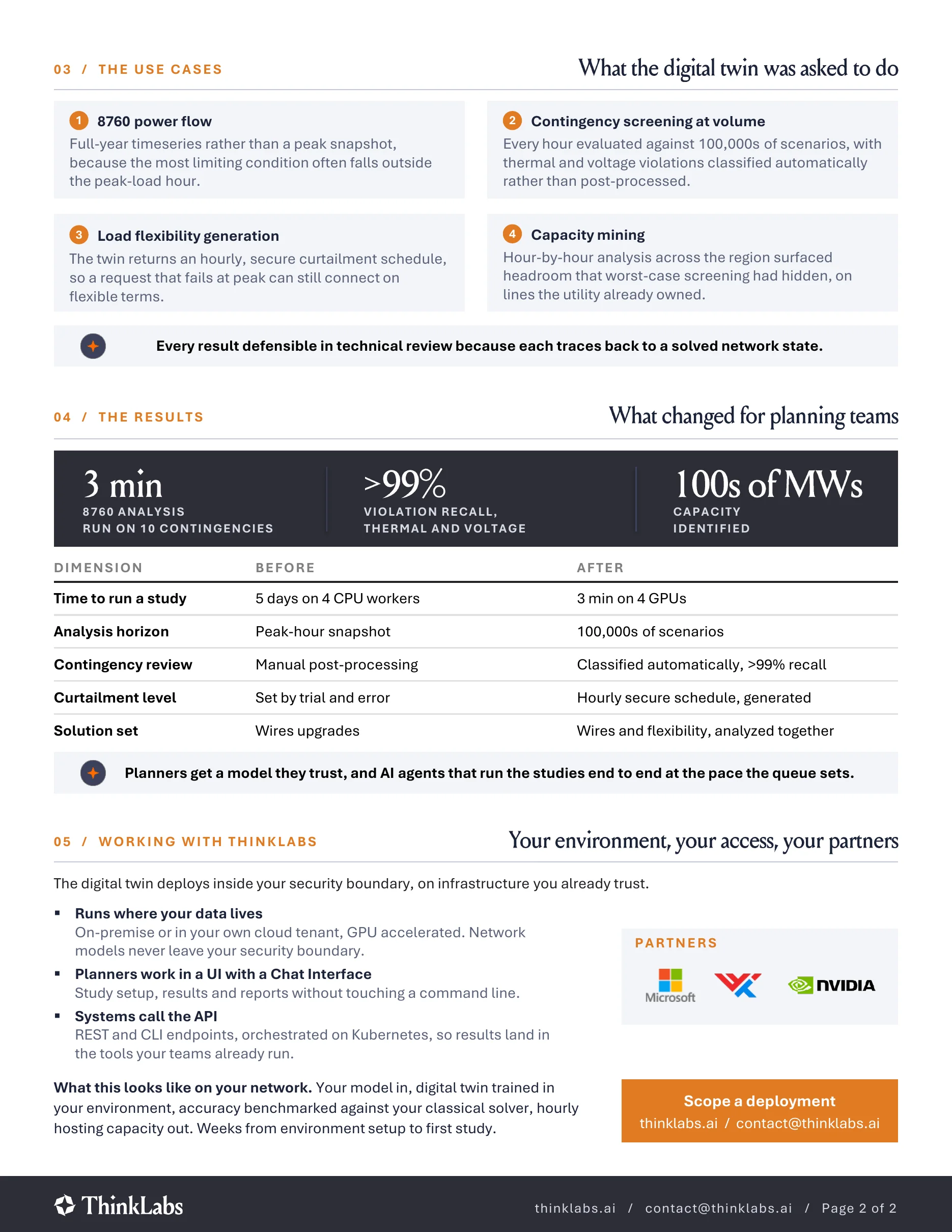
What the digital twin was asked to do
8760 power flow
Full-year timeseries rather than a peak snapshot, because the most limiting condition often falls outside the peak-load hour.Contingency screening at volume
Every hour evaluated against 100,000s of scenarios, with thermal and voltage violations classified automatically rather than post-processed.Load flexibility generation
The twin returns an hourly, secure curtailment schedule, so a request that fails at peak can still connect on flexible terms.Capacity mining
Hour-by-hour analysis across the region surfaced headroom that worst-case screening had hidden, on lines the utility already owned.
Every result defensible in technical review because each traces back to a solved network state.
What changed for planning teams
Planners get a model they trust, and AI agents that run the studies end to end at the pace the queue sets.
Your environment, your access, your partners
The digital twin deploys inside your security boundary, on infrastructure you already trust.
Runs where your data lives
On-premise or in your own cloud tenant, GPU accelerated. Network models never leave your security boundary.
Planners work in a UI with a Chat Interface
Study setup, results and reports without touching a command line.
Systems call the API
REST and CLI endpoints, orchestrated on Kubernetes, so results land in the tools your teams already run.
Partners



What this looks like on your network. Your model in, digital twin trained in your environment, accuracy benchmarked against your classical solver, hourly hosting capacity out. Weeks from environment setup to first study.
Scope a deployment