Published November 4, 2026
In mid-September, Google, NVIDIA and Emerald AI launched the AI Energy Management Alliance, with utilities, power producers, and grid technology companies signed on as launch partners. The premise is one this industry should welcome: data centers that flex during the grid’s hardest hours can connect sooner, at larger scale, on the system we already have. The number traveling with the launch is 100 GW, the capacity its founders say America could free up for flexible data centers on the existing grid.
I’m glad to see it. Load growth on this scale is a once-in-a-century opportunity, and flexibility is one of the few tools that moves as fast as the load is arriving. But a number this big deserves scrutiny, because 100 GW on paper only becomes 100 GW energized after it clears every utility’s planning department.
Where the 100 GW comes from
The figure tracks the best-known analysis on the subject, Duke University’s Rethinking Load Growth study, published in February 2025. Its authors estimated that the 22 largest U.S. balancing authorities could absorb 76 GW of new load if that load could be curtailed for a small slice of the year, rising to 98 GW at a 0.5% curtailment rate and 126 GW at 1%. It’s careful, useful work, and it changed how the industry talks about what the existing system can carry.
It also answers a specific question: does a whole balancing area have enough capacity, across the year, to serve more load if that load steps back at peak? The authors were clear about what sat outside that question. They didn’t model transmission constraints, and they described the result as a first-order estimate that needs further analysis to pin down the headroom in each region.
That’s the right altitude for a national policy debate. An interconnection decision happens much closer to the ground.
A gigawatt lives at a bus
When a 300 MW request lands at a utility, nobody asks whether the balancing area has room. They ask whether this substation, these lines, and these transformers can carry it through every hour of the year and every contingency the reliability standards require. A balancing area can have plenty of capacity at peak while the one line serving a promising site overloads for hundreds of hours. The curtailment a flexible load has to deliver depends on where it plugs in, and a regional average can hide the site where the math doesn’t close.
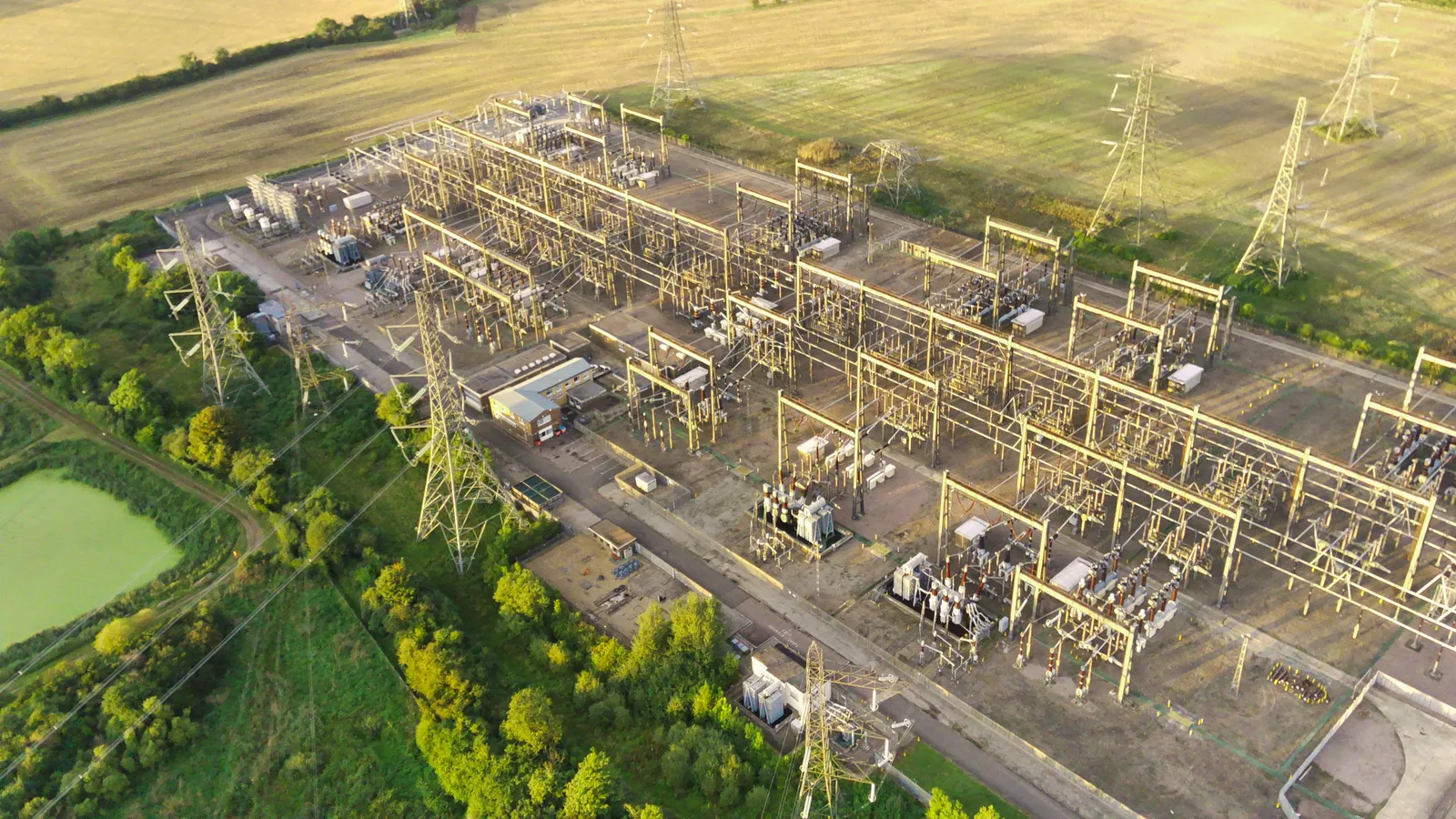
Google’s own experience makes the point. The company has signed 1 GW of data center demand response across five utilities, and it notes that the capability “will only be available at certain locations.” That first gigawatt was found one site and one utility at a time. The next 99 will be found the same way.
What turns an estimate into a connection
The alliance is asking policymakers to give data centers that commit to flexibility a faster, larger grid connection, and to “hold them to it.” I agree with every word. But you can only hold a customer to a commitment you’ve measured. At the point of interconnection, that takes four answers:
- Which assets bind
- In which hours
- Under which contingencies
- How many megawatts of curtailment or on-site supply it takes to clear each one
Getting those answers means running a full year of power flow on the utility’s own network model, bus by bus, with the customer’s generation, storage, and flexibility credited against the constraints they actually relieve. The utility carries the reliability obligation and answers to its regulator for every connection it approves. It can’t sign an interconnection agreement on a portfolio estimate. It can sign one on a study.
Finding the 100 GW
This is the step ThinkLabs was built for. Our agentic solution runs full-year power flow across every line, bus, and node of a utility’s network in minutes. It separates firm headroom from the latent capacity that flexibility makes available, and it awards customer-contributed generation, storage, and curtailment at the point of interconnection, so a flexibility offer becomes terms a utility can operate and defend. Every result can be verified against physics. The utility makes the call, and our job is making sure the analysis behind it holds up.
The alliance has put a big number on the table, and the industry is better for it. Now comes the work of finding it, one bus and one signed agreement at a time. Let’s go find the 100 GW.
→ See your firm and flexible headroom, bus by bus. Talk to our team